
Ants
Ghost ant, big-headed ant, pharaoh ant, fire ant, carpenter ant.
Which one is it?
Ghost ant
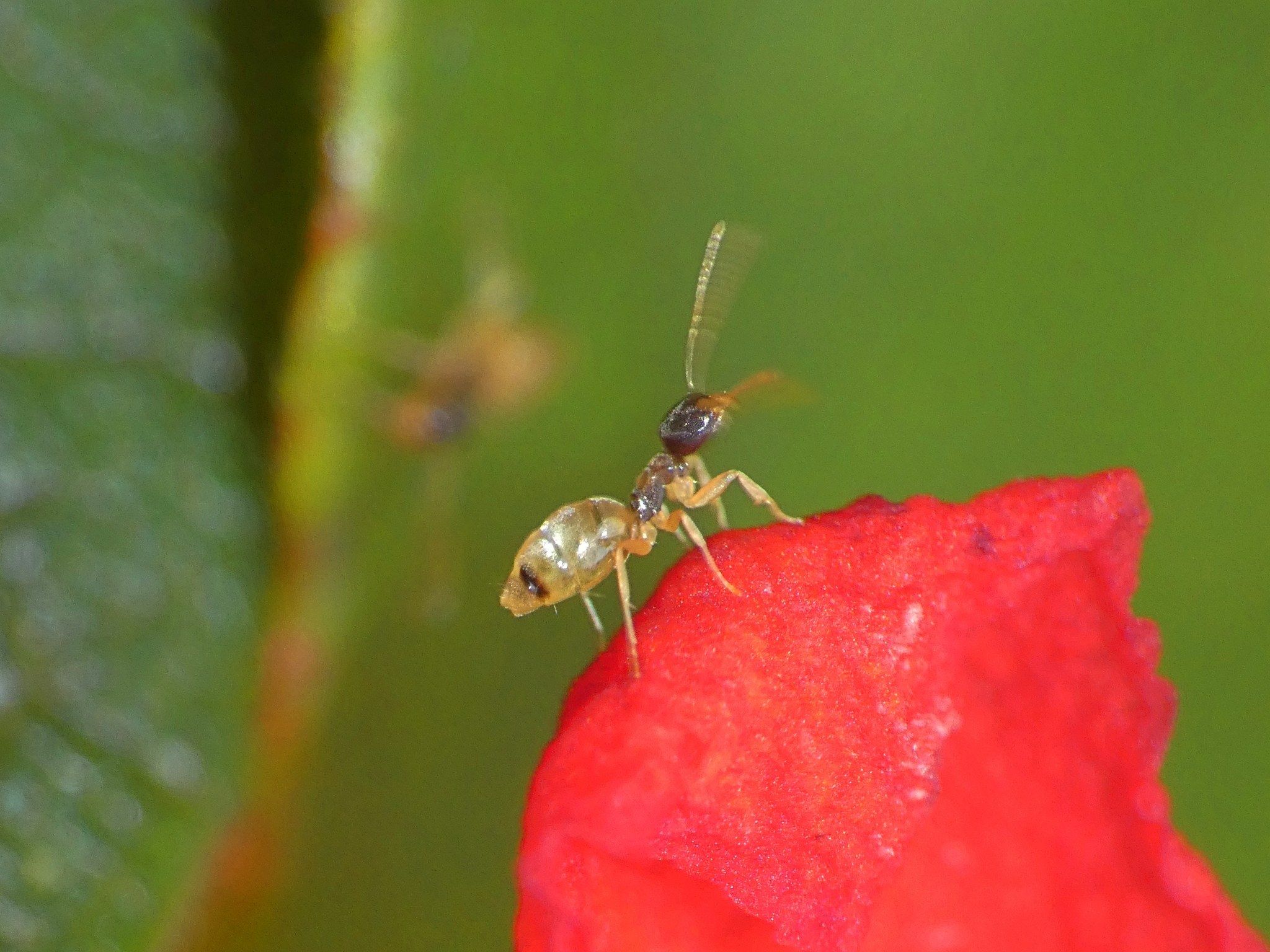
Photo: Kai Squires, CC BY 4.0, via iNaturalist
Tiny, with a dark head and a pale, almost see-through body. Trails along counters and bathroom sinks. Nests in wall voids and potted plants.
Big-headed ant

Photo: geosesarma, CC BY 4.0, via iNaturalist
Small and brown; the larger workers have an oversized head. Nests in the soil along the slab and leaves little piles of dirt along baseboards and patio edges. Their colonies join up into supercolonies that can spread across a whole yard.
Also needs the lawn baited, to control the supercolonies. Lawn baiting is an add-on service; once they are under control, it can be added to your quarterly program.
Pharaoh ant

Photo: Sandra H Statner, CC BY 4.0, via iNaturalist
Tiny and yellow to light brown. Nests inside the house, in wall voids, behind baseboards and under cabinets. Spraying makes a colony split into more colonies, so pharaoh ants are treated with baits.
Covered by quarterly service once they are under control.
Fire ant
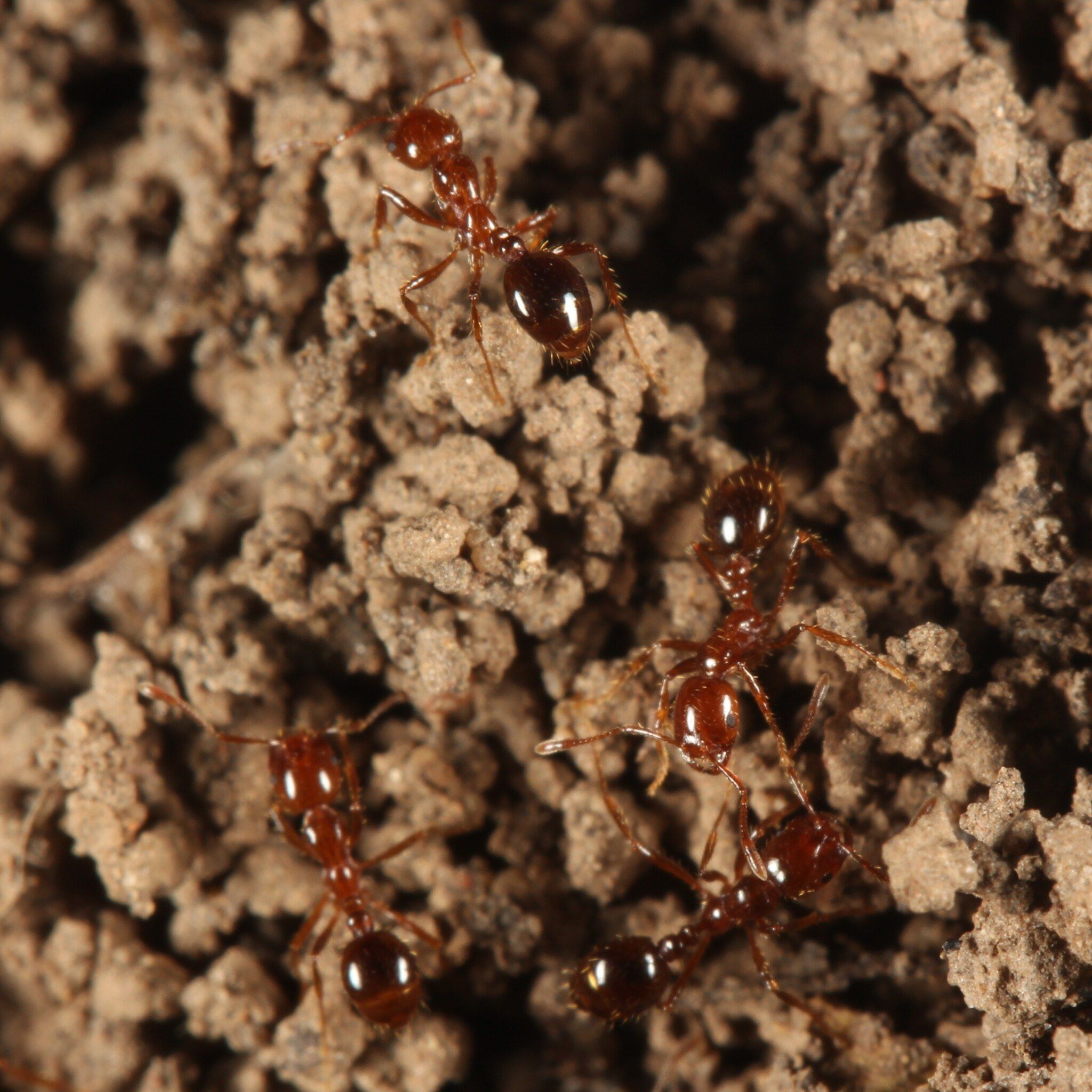
Photo: Natasha Taylor, CC BY 4.0, via iNaturalist
Reddish brown, in several sizes in one colony. Builds dirt mounds in sunny parts of the lawn and stings when a mound is disturbed.
Covered when they are getting into the home. In the yard: fire ant lawn baiting, added to quarterly service.
Carpenter ant
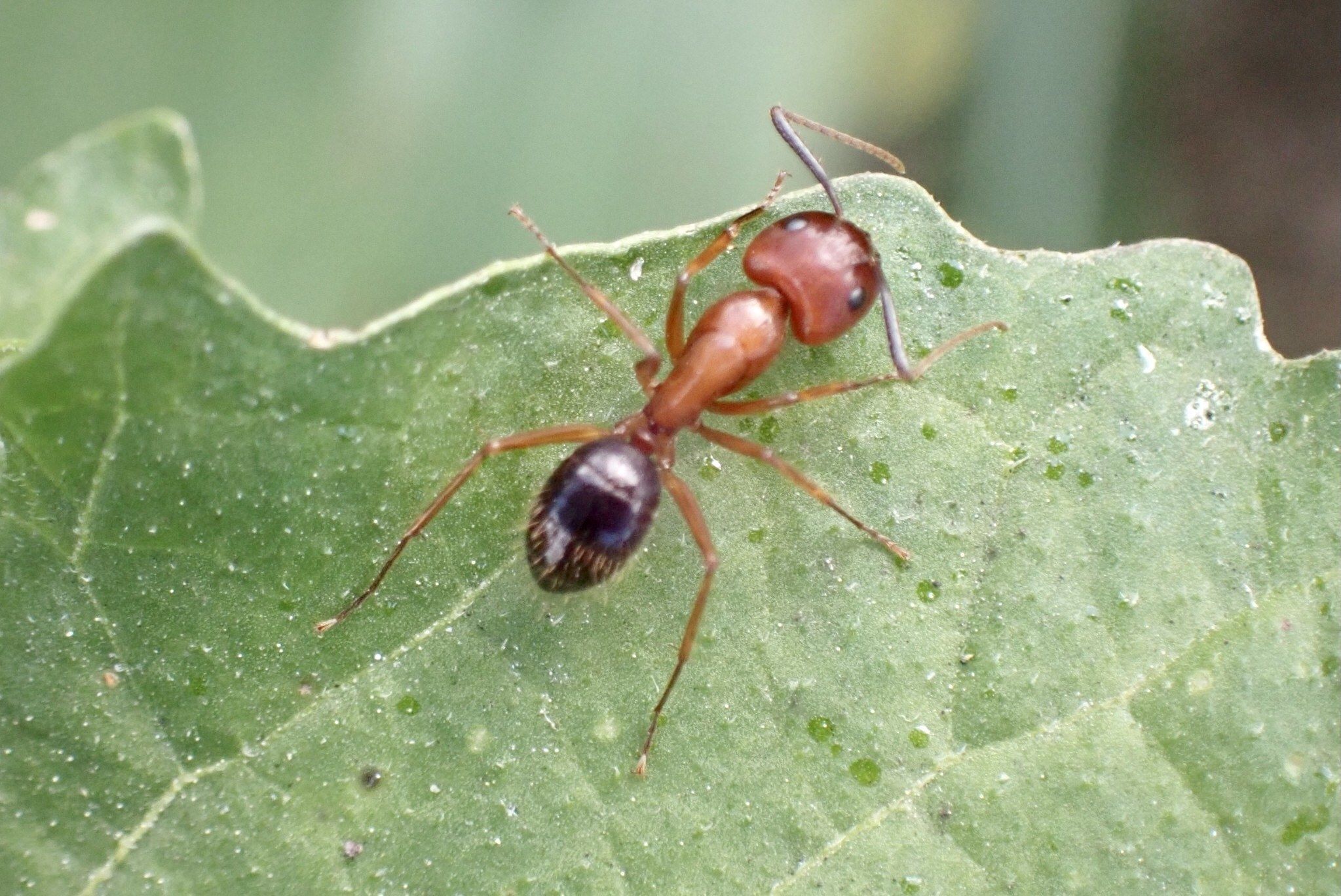
Photo: Julia Beach, CC BY 4.0, via iNaturalist
Large, often reddish with a black abdomen. Forages at night and nests in damp or damaged wood, hollow trees and wall voids.
Why they're in your house in Brevard
Ants come in for food and water. A scout finds crumbs, pet food, sweets or grease and lays a scent trail, and the rest of the colony follows it.
Ghost and pharaoh ants often nest inside, in wall voids, behind baseboards and in potted plants, so the trail starts indoors. Big-headed and fire ants nest in the soil along the slab and walk in through cracks, expansion joints and gaps around doors. Carpenter ants follow branches and utility lines that touch the roof, and nest in damp or damaged wood.
Heavy rain floods nests in the yard and drives colonies indoors, which is why ants often show up right after a storm.
What we do about it
Fire ants and big-headed ants in the lawn: lawn baiting is an add-on service. Call for pricing.
Covered by quarterly service?
Ready when you are.
Call, or start quarterly service online.